Text Size:
Current Size: 100%
The National Institute for Health and Clinical Excellence (NICE) is part of the NHS and is the independent organisation responsible for providing national guidance on treatments and care for people using the NHS in England and Wales and is recognised as being a world leader in setting standards for high quality healthcare and are the most prolific producer of clinical guidelines in the world.
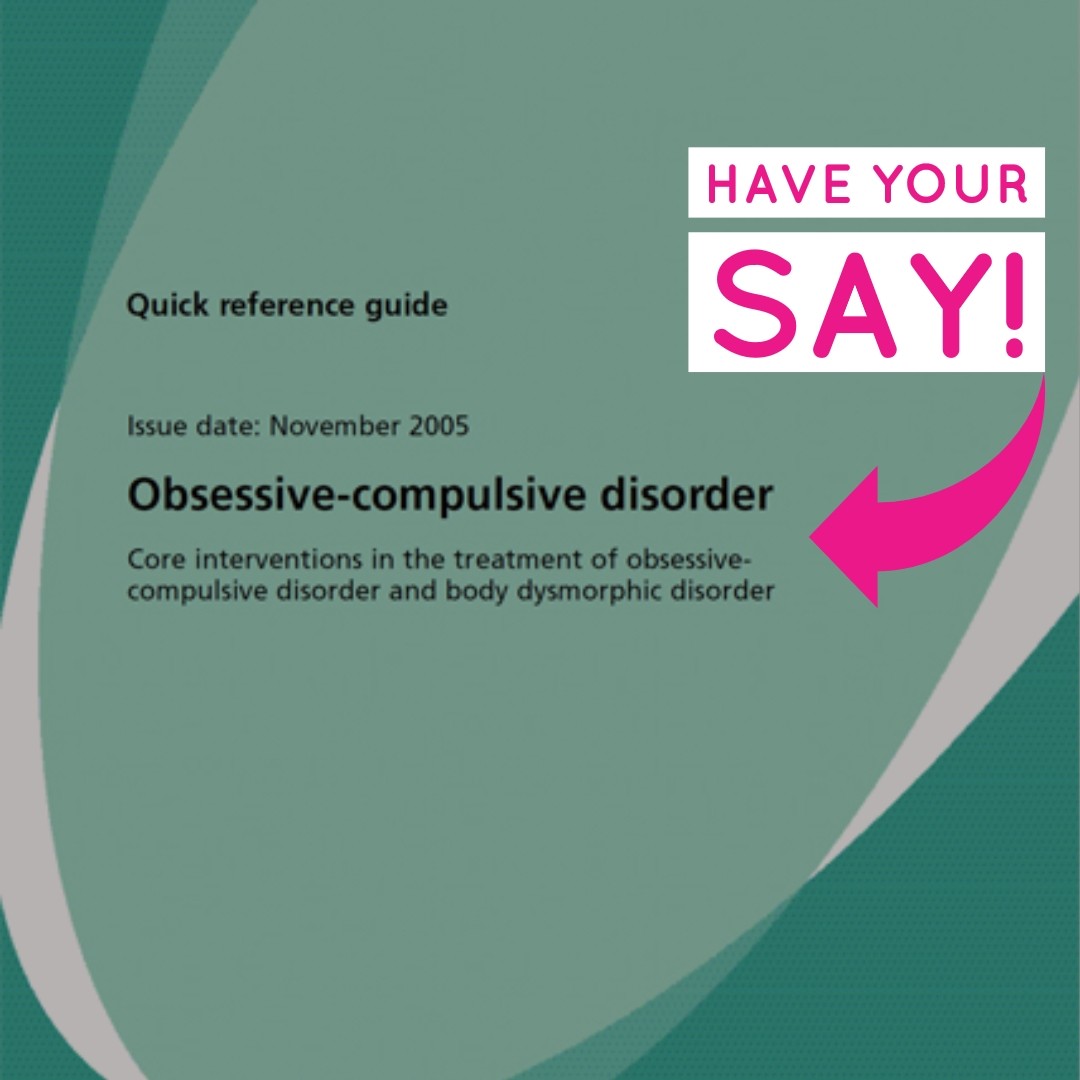
The National Institute for Health and Clinical Excellence (NICE) and the National Collaborating Centre for Mental Health launched their set of clinical guidelines for the identification, treatment and management of Obsessive-Compulsive Disorder and Body Dysmorphic Disorder for children and adults on 23rd November 2005.
OCD-UK was involved as a stakeholder in the initial development of the guidelines for OCD and the subsequent press launch.
The guidance is intended for health care professionals, patients and their carers to help them make decisions about treatment and health care. The information that follows is a summary of the basic points that the NICE Guideline recommend for the management of OCD for children and adults.
What the guidelines recommend – Basic points
But despite the breakthroughs in awareness and understanding and treatment of OCD, many GPs and mental health professionals may not recognise the symptoms of OCD or even know how to correctly treat the disorder. Therefore, you may also wish to refer your GP to National Institute for Health and Clinical Excellence (NICE) guidelines for the identification, treatment and management of OCD and BDD.
In general, doctors, nurses and other healthcare professionals in the NHS are expected to follow NICE’s clinical guidelines.
If you would like a copy of the NICE guidelines you can download them from the NICE website:
You can also order copies by calling the NHS Response Line on 0845 003 7783 (national rate) and asking for:
Alternatively, you can obtain a copy from OCD-UK. Please send two first class stamps when requesting your copy.
OCD-UK Comment
23rd Nov 2005: OCD-UK are delighted that the new NICE guidelines for OCD have been released and hopefully will now provide more consistent treatment for this often disabling condition. We are pleased to see that the guidelines recommend psychological treatments such as Cognitive Behaviour Therapy (CBT) as the first line of treatment for OCD.
However, we have huge concerns that the guidelines will benefit the majority of OCD sufferers unless much needed investment is made available to improve psychological services.
The NICE guidelines are undoubtedly a step in the right direction and we certainly welcome their introduction but we doubt a beneficial impact from the guidelines without more accurate and earlier diagnosis of OCD.
OCD-UK Comment
9th Feb 2011: With a review of the NICE guidelines for OCD currently under consideration, OCD-UK remain concerned that the NICE guidelines for OCD are still largely not fully being implemented by the majority of local MH Trusts. OCD-UK also remain concerned that the treatment recommended by NICE often remains ineffective due to the lack of quality, often due to a failure to fully understand OCD by the treatment provider.
Whilst believing the NICE guidelines generally offer the correct advice on treating OCD, OCD-UK would like to see NICE work harder to enforce the implementation of the guidelines across all Trusts, and that the quality of treatment provided is if of a high standard.
NICE FAQ's
What are NICE clinical guidelines?
Clinical guidelines are recommendations on the appropriate treatment and care of people with specific diseases and conditions within the NHS in England and Wales. They are based on the best available evidence. Guidelines help healthcare professionals in their work, but they do not replace their knowledge and skills.
What are clinical guidelines for?
Good clinical guidelines can change the process of healthcare and improve outcomes. For example, well-constructed and up-to-date clinical guidelines:
How does NICE develop its clinical guidelines?
The guideline topics referred to NICE by the Secretary of State for Health and the Welsh Assembly Government are published on the NICE website. Stakeholder organisations are then invited to register their interest in individual guidelines through the website.
The boundaries of the guideline – what it will and will not cover – are drawn up by the National Collaborating Centre (NCC) commissioned by NICE to develop the guideline. They are written up in a document called the scope. NICE, registered stakeholders and an independent Guideline Review Panel have input into the development of the scope.
The NCC then establishes a Guideline Development Group comprising health professionals, lay representatives and technical experts. This Group assesses the evidence available on the guideline topic and makes recommendations based on this evidence. These form the core of the guideline.
Registered stakeholders have two opportunities to comment on the draft guideline, which is posted on the NICE website during the consultation periods. The Guideline Review Panel also reviews the guideline and checks that stakeholders’ comments have been addressed.
Following the final consultation period, the Guideline Development Group finalises the recommendations and the NCC produces the final documents. These are then submitted to NICE. NICE formally approves the guideline and issues its guidance to the NHS in England and Wales.