Update on NICE
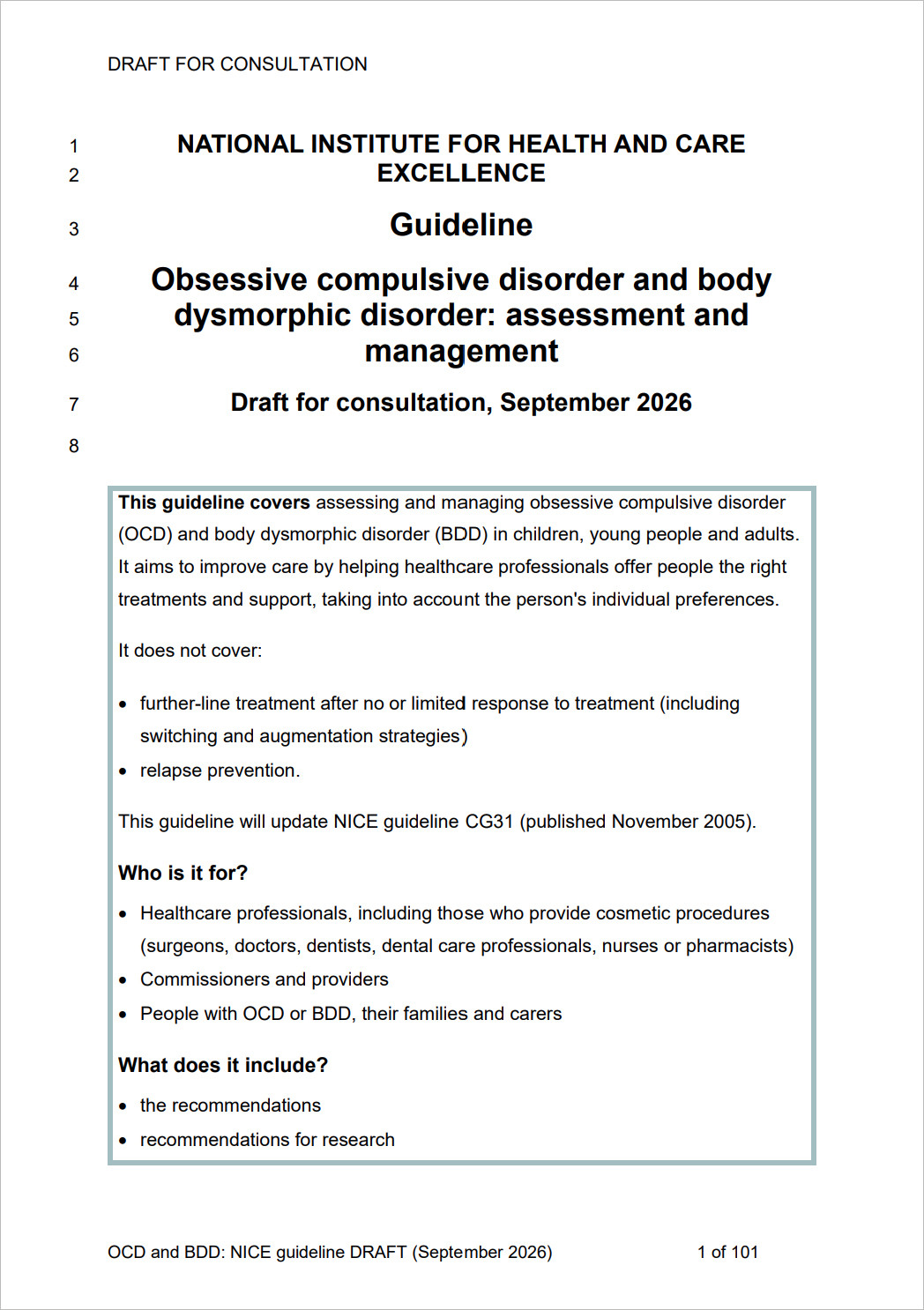 In September we reported that we had huge concerns about the proposed updates to the National Institute for Health and Care Excellence (NICE) guidelines for the treatment of OCD and BDD.
Given the significant concerns with the current draft document, we contacted NICE and met with them on multiple occasions, urging them to immediately pause, reflect and proactively take clear action to revise the current draft. We followed that up by formally writing to NICE, with letters also sent to the Prime Minister, the Rt Hon Andy Burnham, MP and Rt Hon Yvette Cooper, MP, the Secretary of State for Health and Social Care.
Whilst the Chief Executive of NICE, Professor Jonathan Benger, acknowledged our letter and reassured us that the points we raised will be fully considered in the post consultation review and decision-making processes. However, based off conversations with NICE, we remain concerned that they have already made their decision and the consultation process is nothing more than a procedural process rather than a meaningful exercise.
The consequence of this is that a significantly high proportion of those reaching out for treatment, who don’t respond successfully to their first course, will be left without clear direction on how to access help and support that was offered through the existing 2005 guidelines which provided a stepped care approach to treatment.
OCD-UK submit consultation document.
OCD-UK completed the consultation process and on the 21st October submitted a 56-page document setting out detailed, constructive feedback on the proposed new OCD guidance including our comments, concerns and recommendations. We also submitted consultation feedback on the proposed new OCD Quality Standard, which we have declined to support at this time.
We did however reiterate our commitment to continue working collaboratively with NICE to ensure the guidelines meet the high standards expected of quality clinical guidance, which promote the use of evidence-based treatments. We remain open to further engagement to help shape the new guideline document and the quality standard should they wish to draw on our expertise.
Our stance remains clear; it’s our belief that in its current state, with such significant omissions, the proposed guidelines would not just be failing children and adults that suffer because of OCD, it will also leave them isolated with the potential for increased and prolonged suffering.
– ENDS
What are NICE Guidelines?
NICE guidelines are evidence-based recommendations published by the National Institute for Health and Care Excellence (NICE) to guide and influence the health and care we receive through the National Health Service (NHS).